
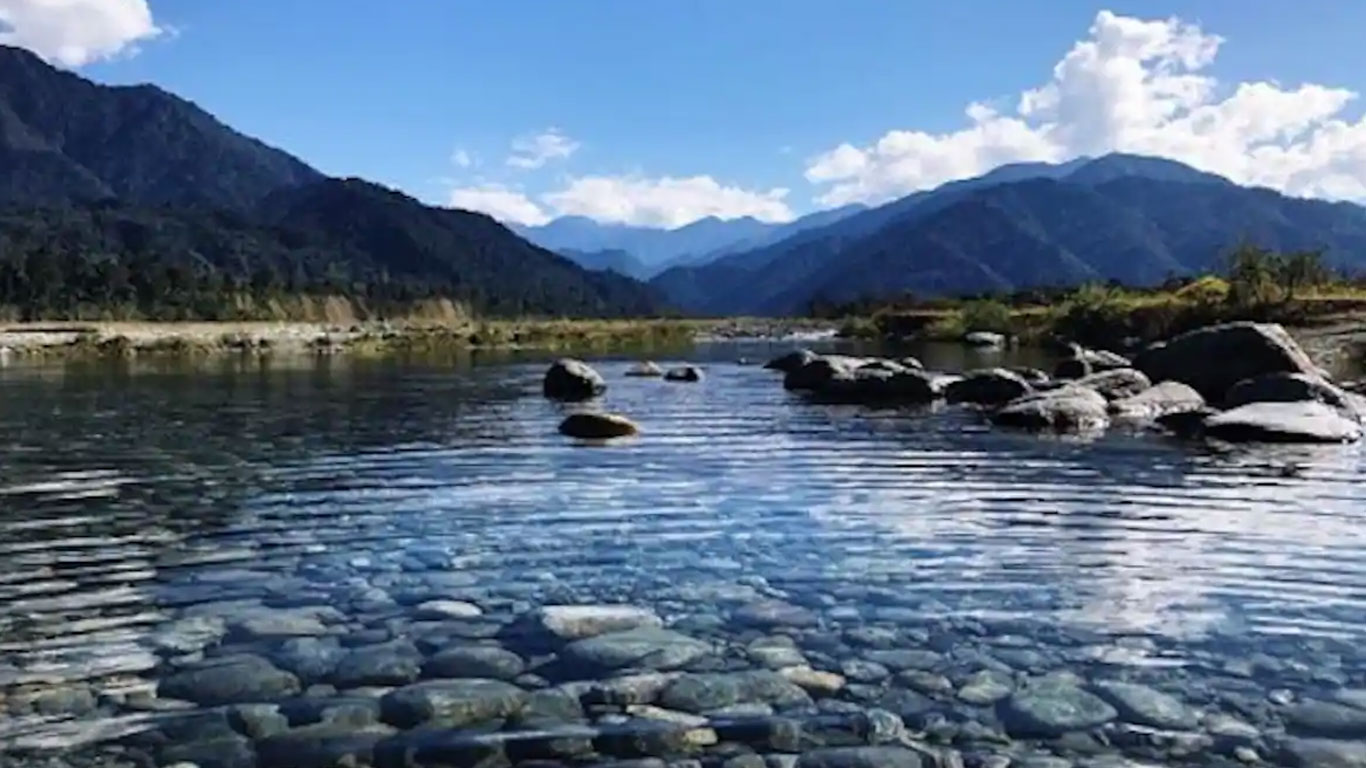

Roing Travel Guide – Gateway to the Dibang Valley
Orientation
Roing is one of eastern Arunachal Pradesh's most important tourism hubs and serves as the headquarters of Lower Dibang Valley District. Positioned at an elevation of approximately 390 metres, the town sits between the plains of Assam and the mountains leading towards Anini and the Upper Dibang Valley.
For most travellers, Roing Travel marks the beginning of a journey into one of India's least explored mountain regions. The town itself is relatively compact, but it acts as the base for excursions to mountain passes, high-altitude lakes, wildlife sanctuaries, archaeological sites and tribal villages.
Roing stands on the banks of the Deopani River, a tributary of the Dibang, and is surrounded by evergreen forests, cultivated fields and gradually rising hills. The climate is warmer than destinations such as Tawang or Mechuka, allowing comfortable travel for much of the year.
Its location also makes it one of the easiest places in Arunachal Pradesh to reach by road. Since the opening of the Bhupen Hazarika Setu (Dhola–Sadiya Bridge) across the Brahmaputra, travel from Assam has become significantly quicker, encouraging more visitors to include Roing in their Arunachal itineraries.
Unlike many destinations where visitors simply pass through, Roing rewards those who spend several days exploring the surrounding region. A carefully planned Roing tour plan allows travellers to experience forests, mountain roads, tribal culture and archaeological heritage within a relatively small geographical area.
A Brief History of Roing
Although Roing is a modern administrative town, the surrounding region has been inhabited for centuries by indigenous communities, particularly the Idu Mishmi, Digaru Mishmi and Adi tribes.
The Dibang Valley has long served as an important corridor linking the Himalayan interior with the plains of Assam through traditional trade routes. Bamboo, medicinal plants, forest products and agricultural goods were exchanged between mountain communities and traders from the plains.
Following Indian independence, Roing gradually developed into the district headquarters, bringing government institutions, schools, healthcare facilities and transport infrastructure to the region.
Today, it functions as the principal commercial and administrative centre for Lower Dibang Valley while retaining a close relationship with its tribal heritage.
Roing Today
Modern Roing balances development with its traditional identity.
Government offices, educational institutions, markets, hotels and restaurants serve both residents and visitors, while nearby villages continue to preserve traditional customs and agricultural practices.
The town is also becoming increasingly important for adventure tourism.
Travellers heading towards Mayudia Pass, Anini, Dibang Wildlife Sanctuary and remote mountain villages generally spend at least one night in Roing before continuing their journey.
Because it offers reliable accommodation, banking facilities, fuel stations and medical services, Roing is regarded as one of the best logistical bases for exploring eastern Arunachal Pradesh.
The Landscape Around Roing
One of Roing's greatest attractions is the diversity of landscapes found within a relatively short driving distance.
Dense evergreen forests gradually give way to temperate woodland as roads climb towards Mayudia Pass.
Fast-flowing rivers descend from the mountains before joining the Dibang River system.
Numerous streams, waterfalls and small lakes are scattered across the district, while distant mountain ridges dominate the northern horizon.
This remarkable variation in altitude creates an equally varied ecosystem supporting hundreds of plant and animal species.
The Dibang River System
Although the Dibang River flows some distance from Roing itself, it shapes much of the geography and economy of the district.
Originating in the high mountains near the India–China border, the river travels south through the Dibang Valley before joining the Brahmaputra in Assam.
The Dibang is among the fastest-flowing rivers in north-east India and remains an essential source of water for agriculture, fisheries and local livelihoods.
Several viewpoints around Roing provide opportunities to appreciate the scale of this river system and the valleys it has created over thousands of years.
Major Attractions Around Roing
Roing offers considerably more sightseeing opportunities than many first-time visitors expect.
Lakes, wildlife sanctuaries, archaeological remains, mountain passes and village experiences can all be explored within comfortable driving distance.
Most visitors spend between three and five days here before continuing towards Anini or returning to Assam.
Mehao Wildlife Sanctuary
One of Arunachal Pradesh's richest protected forests lies only 14 kilometres from Roing.
Established in 1980, Mehao Wildlife Sanctuary covers approximately 282 square kilometres and extends from tropical forests at lower elevations to temperate forests higher in the mountains.
The sanctuary forms part of an important ecological corridor connecting several protected forests across eastern Arunachal Pradesh.
Its varied habitats support a remarkable range of wildlife.
Mammals recorded here include clouded leopard, leopard, Asian black bear, wild dog, capped langur, hoolock gibbon, red panda, musk deer, serow and several species of civets and squirrels.
The sanctuary is equally important for birdlife.
Hornbills, laughingthrushes, barbets, pheasants, woodpeckers and numerous migratory birds attract birdwatchers from across India and abroad.
Botanists also value the sanctuary because of its rich diversity of orchids, ferns, bamboo and medicinal plants.
Entry into certain sections may require permission from the Forest Department, and local guides are strongly recommended for longer walks.
Mehao Lake
Situated within Mehao Wildlife Sanctuary, Mehao Lake is among the district's best-known attractions.
The lake lies amidst dense forest and is reached after a pleasant walk through woodland.
Unlike artificial reservoirs, Mehao Lake is a natural waterbody formed over thousands of years.
Its quiet surroundings make it an excellent location for spending several hours observing birds, butterflies and changing forest light.
Visitors often hear birds and insects long before seeing them, adding another dimension to the experience.
Swimming is not recommended because of the lake's depth and changing underwater conditions.
Those interested in photography should arrive early in the morning when the light is softer, and wildlife activity is generally greater.
Birdwatching Around Mehao
The forests surrounding Mehao Lake rank among the finest birdwatching locations in eastern Arunachal Pradesh. Resident species include hornbills, drongos, flycatchers, minivets, bulbuls, treepies and numerous woodland birds.
Winter also brings additional migratory species. Because many birds remain high in the forest canopy, binoculars greatly improve the experience. Hiring an experienced local guide familiar with bird calls often results in considerably more sightings than independent exploration.
Mayudia Pass
Among the most popular excursions from Roing is the drive to Mayudia Pass, located about 56 km from the town on the road towards Hunli and Anini. Sitting at an altitude of approximately 2,655 metres, the pass offers a dramatic change in landscape within just a couple of hours. Tropical forests near Roing gradually give way to temperate woodland, conifer forests and, during winter, stretches of snow along the roadside.
The journey itself is one of the highlights. The road climbs steadily through dense forests, crossing mountain streams and numerous viewpoints overlooking the Dibang Valley. In clear weather, distant Himalayan ridges can be seen from several locations along the route.
During December, January and February, Mayudia occasionally receives snowfall. While the amount of snow varies each year, it remains one of the easiest places in Arunachal Pradesh to experience winter conditions without travelling to the higher reaches of Tawang.
Travellers should remember that temperatures at Mayudia are considerably lower than in Roing. Warm clothing is essential even if the weather in town feels pleasant.
Road conditions may occasionally be affected by landslides or snowfall, so checking local conditions before departure is advisable.
Driving Beyond Mayudia
For many visitors, Mayudia marks the end of a day excursion.
However, adventurous travellers often continue further north towards Hunli, Anini and the Upper Dibang Valley.
These regions remain among the least explored parts of Arunachal Pradesh and require additional planning, experienced drivers and sufficient travel time.
Road conditions beyond Mayudia become progressively more demanding, particularly during the monsoon season.
Sally Lake
Located only about 3 kilometres from Roing town, Sally Lake provides a convenient escape for visitors wishing to spend a relaxed afternoon outdoors.
The lake was developed as a recreational area and is popular with local residents during weekends and holidays.
Boating facilities are available when operational, while walking paths around the lake offer pleasant views of the surrounding hills and forests.
Morning and late afternoon are generally the best times to visit, when temperatures remain comfortable and bird activity around the lake increases.
Unlike the more remote Mehao Lake, Sally Lake is easily accessible and requires very little walking, making it suitable for families and elderly visitors.
Bhismaknagar Fort
One of the most historically significant attractions near Roing is Bhismaknagar Fort, situated approximately 30 kilometres from town.
The archaeological site dates back several centuries and is widely believed to have been the capital of the ancient Chutiya Kingdom, although historians continue to study its origins and development.
According to local tradition, the fort is associated with King Bhismaka, mentioned in Hindu mythology as the father of Princess Rukmini, who later married Lord Krishna.
While archaeological evidence cannot conclusively confirm every aspect of the legend, the association has become an important part of local cultural heritage.
Excavations have revealed brick structures, fortification walls, drainage systems and pottery, indicating that Bhismaknagar was once a well-planned settlement with sophisticated construction techniques.
The site offers valuable insight into the early history of the eastern Himalaya and remains one of Arunachal Pradesh's most important archaeological monuments.
Visitors interested in history should allow sufficient time to explore the ruins while appreciating the surrounding countryside.
Nehru Van Udyan
Close to Roing town lies Nehru Van Udyan, a landscaped recreational park frequently visited by local families.
Although relatively small, it provides shaded walking areas, gardens and open spaces suitable for short breaks.
Visitors often combine the park with Sally Lake during an afternoon outing.
Iphi-Pani Ghat
Located along the Dibang River, Iphi-Pani Ghat is another pleasant location for spending time beside flowing water.
Residents frequently visit the area for picnics and community gatherings.
The riverbanks provide opportunities for photography, particularly during winter when water levels remain relatively low.
Visitors should exercise caution near the river because currents can be extremely strong even when the surface appears calm.
Village Experiences Around Roing
Several Mishmi and Adi villages surrounding Roing welcome visitors interested in learning about local culture.
Walking through these settlements provides opportunities to observe traditional bamboo houses, community halls, agricultural fields and weaving practices.
Many families continue to cultivate rice, millet, maize and vegetables using traditional methods adapted to the mountain environment.
Handwoven textiles, bamboo baskets and locally produced handicrafts are sometimes available directly from village artisans.
Respectful interaction with local communities usually results in rewarding cultural exchanges.
Getting There
Reaching Roing has become considerably easier following major improvements in transport infrastructure across north-east India. The opening of the Bhupen Hazarika Setu (Dhola–Sadiya Bridge) has reduced travel time from Assam and transformed road connectivity with eastern Arunachal Pradesh.
The nearest major airport is Dibrugarh Airport (Mohanbari) in Assam, located approximately 150 kilometres from Roing. Dibrugarh has regular flights connecting Kolkata, Delhi, Guwahati, Bengaluru and several other Indian cities.
A smaller airport also operates at Tezu, although flight schedules are limited and subject to operational changes. Most visitors continue their journey from Dibrugarh by road.
The nearest convenient railway stations include: Tinsukia, approximately 125 kilometres away. New Tinsukia Junction, offering better long-distance rail connectivity. Dibrugarh Railway Station, which serves travellers arriving from eastern and northern India.
From these stations, taxis and private vehicles are readily available for onward travel.
The Flight of Rail will take you close to Roing, but driving is how you will actually reach Roing. The journey from Dibrugarh generally takes four to five hours, depending upon traffic and weather conditions. The route crosses the impressive Bhupen Hazarika Setu, one of India's longest river bridges, before entering Arunachal Pradesh through the lower Dibang region.
Road conditions along the main highway are generally good, although occasional repairs or monsoon-related disruptions may increase travel time.
Roing Car Rental
Hiring a private vehicle is the most convenient way to explore Roing and the surrounding attractions. Public transport exists but operates on limited schedules and may not be suitable for visitors wishing to cover multiple destinations in a single day.
A dedicated Roing Car Rental allows travellers to visit Mayudia Pass, Mehao Lake, Bhismaknagar Fort, Sally Lake and nearby villages at a comfortable pace. Vehicles with experienced local drivers are particularly useful for mountain roads leading towards Hunli and Anini, where driving conditions require familiarity with the terrain.
Contact us if you need a vehicle to travel around Roing.
Distances from Roing
Roing is well positioned for exploring eastern Arunachal Pradesh and neighbouring Assam.
Approximate road distances are:
Dibrugarh: 150 km
Tinsukia: 125 km
Tezu: 110 km
Mayudia Pass: 56 km
Mehao Wildlife Sanctuary: 14 km
Bhismaknagar Fort: 30 km
Anini: Approximately 235 km (subject to road conditions)
These distances make Roing an excellent base for both short holidays and extended road journeys through the Dibang Valley.
Local People, Demography and Language
The cultural identity of Roing is shaped by the indigenous communities that have lived in the Dibang Valley for generations. Although the town has developed into an important administrative and commercial centre, traditional customs continue to influence daily life, social relationships and local festivals.
The majority of the population belongs to the Idu Mishmi, Digaru Mishmi and Adi tribes. Alongside these communities are Assamese traders, Nepali settlers, government employees and families from different parts of India who have settled in Roing over the years.
This combination has created a town that is modern in its facilities yet firmly rooted in its tribal heritage.
The literacy rate in Lower Dibang Valley is among the highest in Arunachal Pradesh, and education plays an important role in the local community. Schools, colleges and government institutions have contributed to Roing becoming one of the region's leading educational centres.
Hindi is widely spoken and understood throughout Roing, making communication easy for visitors.
English is commonly used in government offices, schools, hotels and tourism establishments.
Among local communities, the various Mishmi dialects and Adi languages continue to be spoken, while Assamese is also understood because of the close relationship between Arunachal Pradesh and neighbouring Assam.
The Idu Mishmi Tribe
The Idu Mishmi are among Arunachal Pradesh's most distinctive indigenous communities and are regarded as the traditional inhabitants of much of the Dibang Valley. Their society has evolved in close association with the forests and mountains, resulting in an extensive understanding of wildlife, medicinal plants and the changing Himalayan environment.
Traditional Idu Mishmi houses are generally constructed from timber and bamboo, raised above the ground to protect against damp conditions and wild animals. Agriculture, hunting, fishing and collection of forest produce have historically formed the basis of their economy, although education, government employment and tourism now provide additional livelihoods.
The Idu Mishmi are also recognised for their weaving traditions. Handwoven shawls, jackets and ceremonial garments display intricate patterns that identify family or clan affiliations.
These textiles remain an important expression of cultural identity.
The Adi Community
Several Adi villages are located around Roing, particularly in the lower valleys. Like the Mishmis, the Adis possess a long tradition of community-based agriculture and sustainable use of natural resources.
Their villages are often characterised by bamboo houses, neatly maintained agricultural fields and strong community institutions. Visitors spending time in these villages gain valuable insight into the rhythms of rural life in eastern Arunachal Pradesh.
Local Festivals
Festivals provide visitors with one of the best opportunities to experience local traditions.
Rather than performances organised specifically for tourists, these are genuine community celebrations connected with agriculture, social harmony and spiritual beliefs.
Reh Festival
The most significant festival of the Idu Mishmi community is Reh.
Usually celebrated during February, Reh is dedicated to prosperity, family well-being and community unity.
The festival includes traditional dances, ceremonial rituals, folk songs and large community feasts.
Visitors travelling during this period may have opportunities to witness public cultural programmes organised in Roing and neighbouring villages.
Solung Festival
The Adi community celebrates Solung, generally during August or September, following the agricultural calendar.
The festival marks prayers for successful harvests and prosperity.
Traditional dance performances, songs and communal meals continue over several days, providing visitors with insight into Adi cultural traditions.
Tamladu Festival
Another important celebration in the Lower Dibang region is Tamladu, observed by the Digaru Mishmi community.
The festival is associated with prayers for peace, harmony and protection from natural calamities.
Although celebrated mainly in Digaru Mishmi areas, cultural programmes may also be witnessed around Roing.
Best Time to Visit Roing
Choosing the Best time to visit Roing depends largely upon the experiences you wish to include in your itinerary.
For most travellers, the period between October and April offers the most comfortable weather for sightseeing, wildlife excursions and mountain drives.
During winter, daytime temperatures remain pleasant in Roing, while mornings and evenings become noticeably cooler.
This is also the season when Mayudia Pass may receive snowfall, making it one of the busiest periods for tourism.
Spring, particularly March and April, offers favourable conditions for visiting Mehao Wildlife Sanctuary, birdwatching and exploring the surrounding forests.
Summer remains relatively warm because of Roing's lower elevation.
The monsoon normally extends from June until September.
Heavy rainfall may occasionally trigger landslides and temporary road closures, especially on routes towards Mayudia and Anini.
Travellers planning a comprehensive Roing Tour generally prefer visiting between November and March, when weather conditions remain most reliable.
Hotels and Resorts in Roing
Accommodation in Roing has improved considerably during recent years.
Visitors now find a good selection of hotels, guesthouses, tourist lodges and family-run homestays catering to different budgets.
Many properties provide comfortable rooms, attached bathrooms, restaurants and parking facilities.
Travellers interested in learning more about local culture may also choose village-based homestays where they can experience traditional hospitality and home-cooked regional food.
Although Roing does not currently offer large luxury resorts, accommodation standards are steadily improving as tourism develops across eastern Arunachal Pradesh.
During the winter season and major festivals, reservations are advisable.
Visitors continuing towards Anini should also confirm accommodation well before departure because options become increasingly limited in remote districts.
Suggested Roing Tour Plan
2 Days / 1 Night
Arrive from Dibrugarh and spend the afternoon visiting Sally Lake and the local market.
The following morning, drive to Mehao Wildlife Sanctuary and Mehao Lake, returning to Roing before departing for your onward destination.
3 Days / 2 Nights
On the first day, explore Roing town, Sally Lake and nearby viewpoints.
The second day can be dedicated to Mehao Wildlife Sanctuary, Mehao Lake and surrounding forest trails.
On the third day, drive to Mayudia Pass, stopping at viewpoints along the route before returning to Roing.
5 Days / 4 Nights
Spend one day exploring Roing.
Dedicate another day to Bhismaknagar Fort and nearby Mishmi villages.
Reserve a full day for Mayudia Pass, allowing enough time to enjoy the mountain scenery and short walks.
Use the remaining days to explore Mehao Wildlife Sanctuary, local markets and surrounding villages.
Extended Dibang Valley Journey
You may combine Roing Travel with a longer expedition through Arunachal Pradesh.
Dibrugarh – Roing – Mayudia – Hunli – Anini is a popular route
Alternatively, you may visit
Dibrugarh – Roing – Tezu – Parshuram Kund – Namsai
For visitors with additional time, Roing can also be linked with Pasighat, Mechuka, Ziro and Namdapha National Park.
Frequently Asked Questions
Where is Roing located?
Roing is located in the Lower Dibang Valley District of Arunachal Pradesh and serves as the principal gateway to the Upper Dibang Valley and Anini.
What is the Best time to visit Roing?
The Best time to visit Roing is between October and April, when weather conditions remain favourable for sightseeing, wildlife excursions and mountain drives.
Travellers hoping to experience snowfall at Mayudia Pass should consider visiting during December or January, although snowfall varies each year.
How many days should I spend in Roing?
Three to four days allow sufficient time to explore Mehao Wildlife Sanctuary, Mehao Lake, Mayudia Pass, Bhismaknagar Fort and nearby tribal villages.
Visitors continuing to Anini generally spend at least one night in Roing before travelling further north.
Is Roing safe for tourists?
Roing is generally regarded as a safe destination. Visitors should follow local advice, avoid unnecessary travel after dark on isolated mountain roads and respect local customs.
Is Roing a good destination for birdwatching?
Yes. The forests surrounding Mehao Wildlife Sanctuary support a wide variety of resident and migratory birds, making the district one of the important birding destinations in eastern Arunachal Pradesh.
Why Travel with NBTT Travel Solution Private Limited?
Travelling through Arunachal Pradesh requires careful planning, especially when visiting remote districts where accommodation, permits and transport need to be arranged well in advance.
With more than two decades of experience across the Eastern Himalaya, NBTT Travel Solution Private Limited offers professionally planned journeys covering every corner of Arunachal Pradesh.
Our services include:
Complete Roing Travel planning
Customised Roing tour plan
Private Roing Car Rental with experienced mountain drivers
Inner Line Permit (ILP) assistance
Hotel, guesthouse and homestay bookings
Wildlife, birdwatching and photography tours
Road expeditions to Mayudia Pass, Hunli and Anini
Tailor-made Arunachal Pradesh itineraries
Whether you are planning a short holiday around Roing or an extended expedition into the Dibang Valley, our local expertise ensures a smooth, well-organised journey with dependable support throughout your trip.
Contact NBTT Travel Solution Private Limited
The Soul of Eastern Himalaya
Mobile: +91 9733300696
From permit assistance and accommodation bookings to complete Roing Travel, Roing Car Rental, customised Roing tour plans, and extended journeys across Arunachal Pradesh, NBTT provides dependable local support backed by decades of experience in the region.
East Himalaya
-
Address:NBTT Travel Solution Private Limited, 19, MN Sarkar Road, Sevoke More Siliguri, State : West Bengal, Country : India. PIN : 734001
-
Call Us at:
+91-9733300696 -
Mail Us:
info@east-himalaya.com
